If your gutters are overflowing during rain—even after you’ve cleaned them—you’re not alone. It’s one of the most common issues homeowners face in Idaho, especially during rainy periods and freeze-thaw seasons. The frustrating part? From the ground, your gutters can look totally fine… while water is still spilling over the edge.
Here are the most common reasons gutters overflow, what to check, and when to call a pro.
The Most Common Causes of Overflowing Gutters
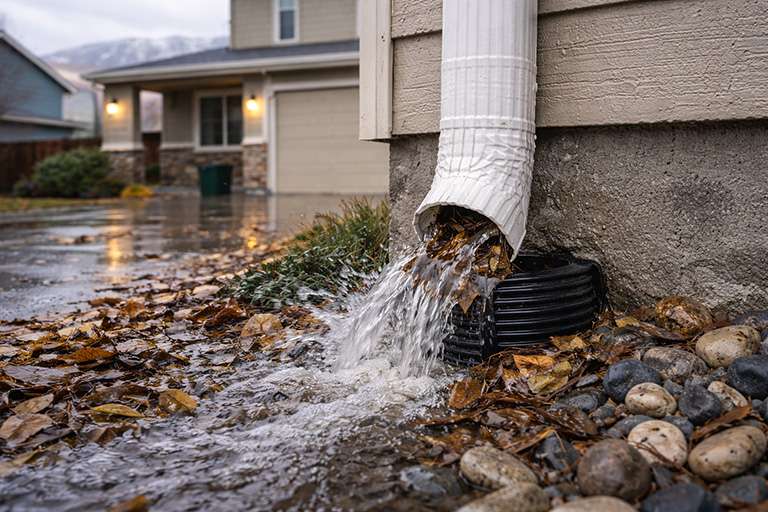
1) The downspout is clogged (the #1 culprit)
Your gutter can be clean, but if the downspout is blocked, water has nowhere to go. When the downspout is slow or fully clogged, the gutter fills up fast and spills over.
Signs this is the issue:
- Overflow happens near the downspout area.
- Water pours quickly over the gutter edge.
- You see water “backing up” in the gutter during rain.
Quick DIY check:
During light rain, look for water entering the downspout. If it’s barely draining (or not draining at all), it’s likely clogged.
During light rain, look for water entering the downspout. If it’s barely draining (or not draining at all), it’s likely clogged.
2) The gutter is pitched the wrong way (slope issue)
Gutters need a slight slope so water flows toward the downspouts. If the pitch is off—even slightly—water can pool in sections and overflow during heavier rain.
Signs:
- Standing water in the gutter long after the rain stops
- Overflow happens in the same spot every time.
- You notice sagging between hangers.
3) Your gutters are sagging or pulling away from the fascia
Over time, gutters can sag from debris weight, improper fastening, or wear on the hangers. When that happens, water doesn’t flow correctly—and it can spill over the front edge or even leak behind the gutter.
Signs:
- Visible drooping sections
- Gaps between the gutter and the roofline
- Water marks behind the gutter or on the fascia board
4) The gutter is too small for the roofline (capacity problem)
Some homes have roof areas that dump a lot of water into one section of gutter—especially in valleys where two roof slopes meet. If the gutter size (or number of downspouts) isn’t sufficient, overflow can happen even when everything is clean.
Signs:
- Overflow only during heavier rain or rapid snowmelt.
- The worst overflow is below a roof valley.
- Water shoots over like a “waterfall” in one concentrated area.
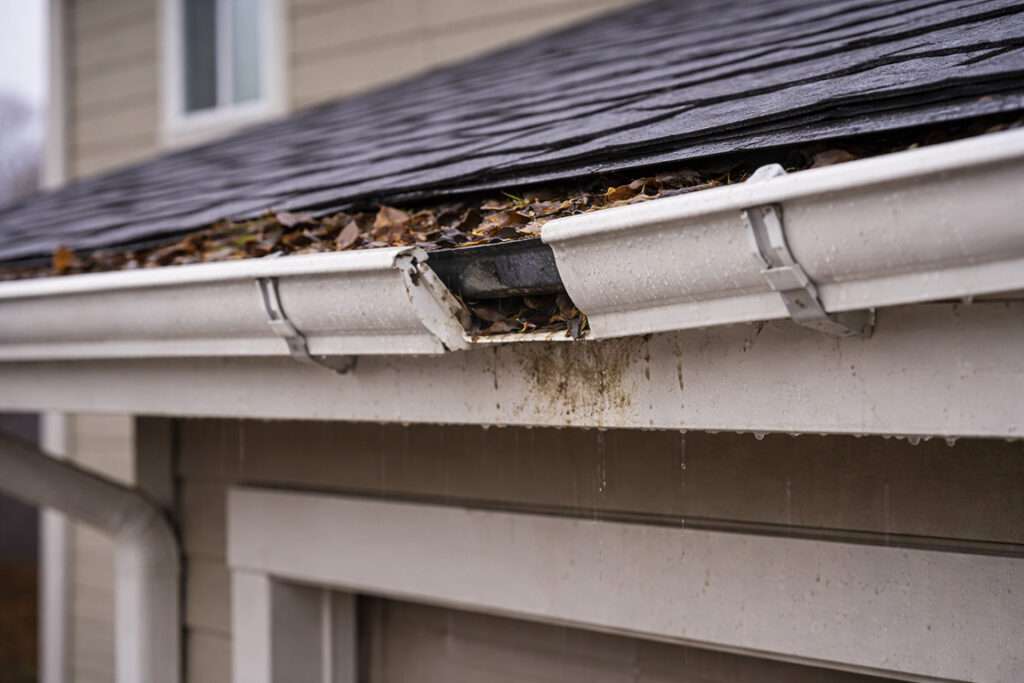
5) Hidden debris is stuck where you can’t see it
From the ground, gutters often look clean… but debris can be trapped:
- Inside elbows and corners
- Under gutter guards
- At the outlet where the gutter meets the downspout
- In roof valleys feeding the gutter
This creates a “dam” that forces water over the edge.
6) Drip edge or roofline issues are sending water past the gutter
Sometimes overflow isn’t really overflow—water is skipping the gutter. If water runs behind the gutter or shoots past it due to roof-edge conditions, you may see splashing and streaking that appear to be a clogged gutter.
Signs:
- Water behind the gutter (not just over the front)
- Wet fascia boards or peeling paint
- Drips form behind the gutter during rain.
7) Ice is blocking drainage (freeze-thaw can still do damage)
Even in a mild winter, Idaho gets freeze-thaw cycles. If an overnight freeze blocks the downspout or creates an icy dam, water backs up and spills over when temperatures rise.
Signs:
- Overflow occurs in the morning or during the melt.
- You see icicles near the downspout area.
- The issue occurs with temperature swings.
Quick Troubleshooting Checklist (Homeowner-Friendly)
Before calling someone, here are a few simple things you can check safely:
✅ Look for overflow patterns: is it one spot or all along the gutter?
✅ Check the downspout: does it drain strongly during rain?
✅ Watch for pooling: Does water sit in the gutter after rain?
✅ Look for sagging or separation: are there dips or gaps?
✅ Inspect valleys below: is the overflow under a roof valley area?
✅ Check the downspout: does it drain strongly during rain?
✅ Watch for pooling: Does water sit in the gutter after rain?
✅ Look for sagging or separation: are there dips or gaps?
✅ Inspect valleys below: is the overflow under a roof valley area?
(If you’re using a ladder, be careful—wet surfaces + winter temps = slippery fast.)
Why Overflowing Gutters Shouldn’t Be Ignored
Overflow isn’t just annoying—it can lead to expensive damage, including:
- Foundation settling or cracks
- Water in crawl spaces or basements
- Fascia and soffit rot
- Stained siding
- Erosion and landscaping washout
- Ice hazards on walkways
Catching the cause early can save a lot of stress (and money).
When to Call a Pro
If your gutters are overflowing and:
- The downspout seems blocked deep inside.
- Water is going behind the gutter.
- Sections are sagging or pulling away.
- Overflow happens mostly under roof valleys.
- You’ve cleaned them, and it still happens.
…it’s worth getting a professional inspection. Many overflow problems stem from pitch, hangers, sizing, or downspout placement—issues that are hard to diagnose from the ground.
Need Help With Overflowing Gutters in Idaho?
Spring Rain Gutters can inspect your system, identify the real cause, and recommend the right fix—whether that’s a downspout solution, repairs, adjustments, or a full replacement.
Serving the Treasure Valley (Boise, Meridian, Nampa, and surrounding areas).
Reach out today for an estimate or inspection.
Reach out today for an estimate or inspection.
References
- Gutters and Downspouts (Building America Solution Center – PNNL) — covers proper gutter slope/pitch and install basics.
- City of Portland – Stormwater Maintenance (Keep gutters clean, check tilt/sagging, roof flashing into gutter)— great support for “clean but still overflow” + “pitch/sagging matters.”
- Fairfax County (VA) Soil & Water Conservation – Downspouts & drainage problems — explains how downspout setup affects wet spots/erosion/foundation problems and roof runoff volume. Fairfax County
- National Weather Service – Preventing Roof Ice Dams — supports freeze/thaw cycles and why winter melt/refreeze can cause water issues.
- CDC/NIOSH – Ladder Safety (home ladder injuries + safety tips) — supports the ladder-safety caution in your checklist section.
- Oklahoma State University Extension – Downspout extensions/disconnecting downspouts — good neutral support for “water needs to be directed away properly.”
- The Home Depot – How to Clean Gutters — supports cleaning frequency + unclogging downspouts as basic homeowner guidance. The Home Depot
- This Old House – How to Size Gutters and Downspouts — supports gutter pitch and performance (helpful for the “pitch/slope issue” section).