
Winter in the Treasure Valley can feel deceptively easy—especially in years when we get little to no snow and it almost feels like “early spring energy.” And when it’s mild outside, it’s natural to assume your house is cruising along just fine too.
But mild winter weather can be sneaky. Dry stretches and calm weeks don’t always mean your gutters are in great shape—they often mean problems are quiet. Debris can settle in the troughs, downspouts can slowly narrow with compacted grit, hangers can loosen bit by bit, and tiny seam leaks can sit unnoticed until the first real rain shows up. Then spring arrives, runoff ramps up, and suddenly you’re dealing with overflow, staining, soggy soil near the foundation, or water landing in all the wrong places.
This post is a practical, Boise-friendly guide to checking your gutters during winter: what to look for, what to fix, and when it makes sense to call Spring Rain Gutters—so you’re not surprised when spring storms roll in.
Why gutters still matter even when winter is “barely winter”
A lot of homeowners connect gutter issues to big snowfalls. That’s understandable—but gutters don’t only fail because of snow. In Boise, a mild winter can still create the perfect conditions for gutter trouble because:
Wind happens. Even when precipitation is low, wind can drop pine needles, small twigs, seed pods, and roof grit into the system. That debris doesn’t have to look dramatic to cause problems—downspouts can clog with a surprisingly small amount of compacted material.
Temperature swings still happen. You don’t need blizzards for stress. Small expansions and contractions can loosen fasteners and reveal weak points at seams, corners, and end caps.
Dry weather hides issues. If it’s not raining much, you won’t see obvious overflow. A seam leak might only drip during heavier rain. A downspout might be partially blocked but still “kind of” drain during light showers. When spring arrives and rainfall becomes more consistent, those half-hidden issues finally show themselves—often all at once.
The goal of a winter check is simple: catch small issues now, when they’re easier (and cheaper) to fix, instead of discovering them during a storm.
What gutters are supposed to do (and what happens when they don’t)
Your gutter system has one job: collect water from the roof and direct it away from the home safely. When it works, water leaves your roofline, travels through the gutter, down the downspout, and gets discharged away from the foundation.
When it doesn’t work, water can end up in places that create long-term headaches, like:
- Behind the gutter, soaking fascia boards and trim
- Down the siding, leaving stains and streaks
- Along the foundation line, creating persistent damp soil and pooling
- Onto walkways and driveways, leading to erosion (and icy patches during cold snaps)
- Into crawlspaces or basements (depending on grading and drainage)
Most homeowners don’t notice the early stage because it’s rarely dramatic at first. It’s usually one corner that drips, one downspout that’s slow, one spot where the gutter line is slightly off. But those small “one spot” issues add up over time.
The winter gutter check: a step-by-step walkthrough
You don’t need to be an expert to do a solid gutter inspection. You just need to look at the right things in the right order.
1) Start with a simple perimeter walk
If you can, do this after any rain—even a light one. Walk around your home and look up at the roofline and down at the ground below.
Watch for:
- Drips or steady water trails from corners or seams
- Staining on fascia/trim
- Water marks on siding
- Splash patterns below the gutter edge
- Mud trenches or pooling near the foundation
If you see consistent staining or wet areas in the same spots, that’s often a sign of repeated overflow or a leak point.
2) Look for sagging or “wavy” gutter lines
From the ground, scan along the length of the gutter. It should look clean and straight.
Sagging is usually caused by:
- Debris weight
- Loose hangers
- Fascia weakness behind the gutter
- Poor slope/pitch
Even mild sagging can cause standing water in the gutter, increasing the risk of overflow and accelerating wear over time.
3) Check the most common leak points first
If you do climb a ladder (safely), focus on the places most likely to leak:
- Inside and outside corners
- End caps
- Seams on sectional gutters
- Downspout outlets (where water drops into the downspout)
A tiny leak at a corner doesn’t look like a big deal—until it repeats for weeks and starts damaging trim or staining siding.
4) Don’t skip the downspouts
Downspouts are the “make or break” part of the system. A gutter can look fine, but if the downspout is blocked or slow, water backs up and spills over the edge.
Clues your downspout may be partially blocked:
- Overflow during rain, even when the gutter looks “not that full”
- Water gurgling or churning near the outlet
- Dripping from seams that only happens during rainfall
- Water running over the gutter edge near the downspout drop
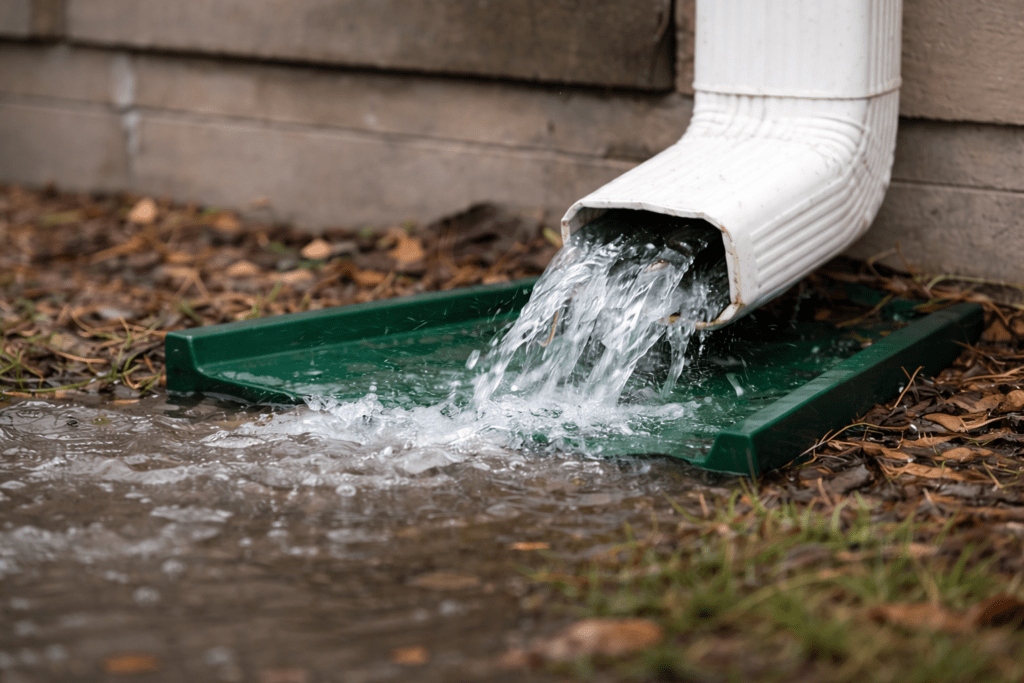
5) Check the discharge locations
Where does your downspout send water?
If it dumps water right next to the house, that’s a common foundation-zone risk. Ideally, water should discharge away from the foundation line. This is where downspout extensions and splash blocks can make a big difference, especially in areas where soil stays wet or where pooling occurs in spring.
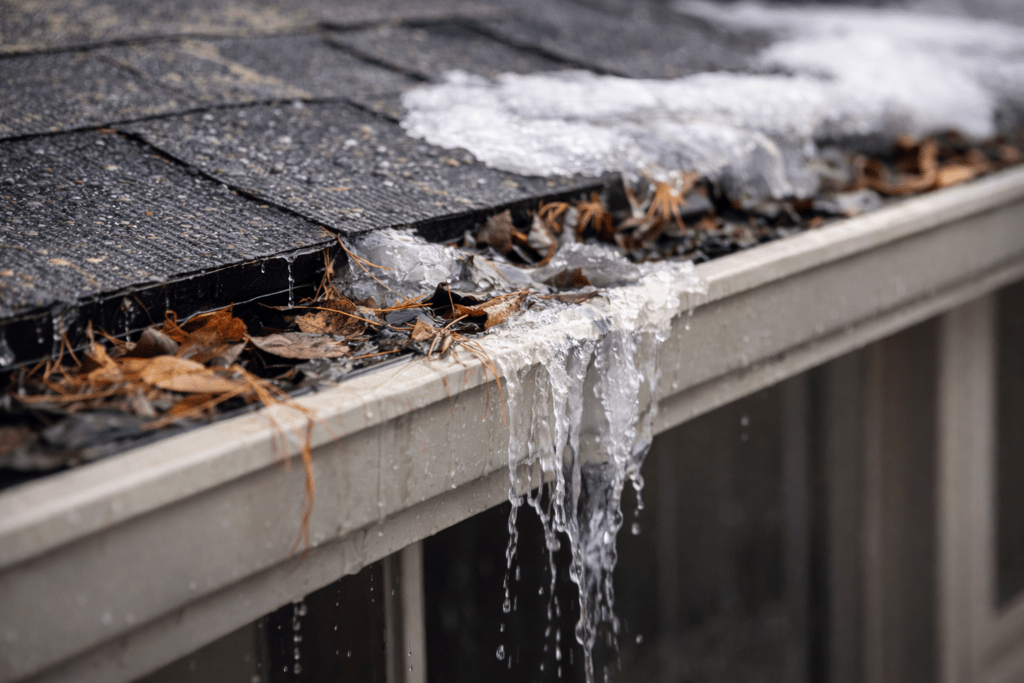
6) Check for roof grit and compacted debris
Even if you don’t have big leaf piles, Boise homes often collect:
- Shingle granules (roof grit)
- Pine needles (which weave together and clog easily)
- Small twigs and seed pods
Compacted debris is especially common in elbows and tight turns in the downspout system. It can build up slowly and stay unnoticed until rain intensity increases.
The most common “quiet” problems heading into spring
In a year like this—mild winter, low snow—the most common gutter issues are usually the ones that don’t look dramatic until they suddenly do.
1.) A partially clogged downspout
Water still drains “enough” during light showers, but the system can’t keep up once spring rain becomes steady. Overflow starts at corners and low points, and you’ll see splash patterns below the gutter edge.
2.) Small seam or corner leaks
Seals age, seams loosen slightly, and corners become drip points. If your home has painted trim, this often shows up as peeling or bubbling paint. If it’s bare wood or older paint, it can become soft and damaged over time.
3.) Loose hangers and slight separation from fascia
This often starts as a small gap between the gutter and fascia. When water runs, it can slip behind the gutter and soak the wood. Because it’s hidden, homeowners often don’t notice until there’s visible staining or rot.
4.) Poor slope (pitch) causing standing water
Standing water doesn’t drain efficiently, increasing the risk of overflow during the next rain. It can also lead to faster corrosion in some systems.
5.) Downspouts discharging too close to the foundation
This isn’t always a “gutter problem,” but it’s a drainage problem that affects the home the same way. When the ground near the foundation stays wet, it can lead to settling, soggy landscaping, and persistent dampness in crawlspaces.
DIY vs. calling Spring Rain Gutters
A lot of homeowners can do a basic inspection and even basic clean-out—especially on single-story homes. The key is safety and knowing where DIY ends.
DIY is usually fine if:
- You have a single-story home
- You feel confident using a ladder safely
- You’re removing light debris and confirming flow
- You don’t see sagging, separation, or consistent leaks
It’s smart to call a pro if:
- Your home has two stories or steep rooflines make access risky
- You see sagging, or the gutter is pulling away from the fascia
- Leaks keep showing up at seams or corners
- Water is pooling near the foundation or leaving mud trenches
- You want upgrades (seamless gutters, rerouting drainage, and added downspouts)
A pro inspection is often valuable because it’s not just about cleaning. It’s about identifying weak points before spring exposes them.
Upgrades worth considering before spring
If you want fewer gutter problems this year—and less maintenance—these are the most common upgrades that help.
1) Downspout extensions or improved discharge routing
One of the simplest improvements that can protect your foundation zone. If you’ve ever noticed puddling near the home after rain, start here.
2) Seamless gutters if you’re constantly fighting leaks
Sectional gutters have more seams, which means more potential leak points. If you’ve repaired the same corners repeatedly, seamless can reduce ongoing maintenance.
3) Additional downspouts where rooflines dump heavy flow
If one area of your roofline consistently sends heavy runoff to a single downspout, adding another downspout can reduce overflow and improve drainage during spring storms.
Spring rains in Boise can show up fast, and gutters that seem “fine” during winter can struggle once runoff becomes steady. If you’d rather not wait for overflow or drainage issues to reveal themselves, Spring Rain Gutters can inspect your system, clear debris, and make sure water is draining safely away from your home. We offer free on-site estimates, seamless rain gutter installation, and advanced gutter protection with Alu-Rex Products (Hover Technology)—some of the most advanced options on the market, designed for superior durability and debris protection. Reach out today to schedule your free on-site estimate.
References
- National Weather Service (NWS) – Boise, ID. “Local Climate Summary.” Accessed January 22, 2026.
- NOAA National Centers for Environmental Information (NCEI). “U.S. Climate Normals.” Accessed January 22, 2026.
- U.S. Environmental Protection Agency (EPA). “A Brief Guide to Mold, Moisture and Your Home.” Accessed January 22, 2026.
- Centers for Disease Control and Prevention (CDC). “Mold: About / Prevention.” Accessed January 22, 2026.
- Centers for Disease Control and Prevention (CDC). “Mold Cleanup.” Accessed January 22, 2026.
- Federal Emergency Management Agency (FEMA). “Protect Your Home From Flooding (PDF).” Accessed January 22, 2026.
- Occupational Safety and Health Administration (OSHA). “Safe Use of Extension Ladders (PDF).” Accessed January 22, 2026.
- InterNACHI (International Association of Certified Home Inspectors). “Inspecting Gutters and Downspouts.” Accessed January 22, 2026.
- InterNACHI (International Association of Certified Home Inspectors). “Roof Drainage Systems (Downspouts/Discharge).” Accessed January 22, 2026.
- Seattle Public Utilities (City of Seattle). “Wet Weather Preparation.” Accessed January 22, 2026.